Research and Writing
My academic work focuses on virtue ethics, hope, and human flourishing. More recently I've been thinking about how these classical frameworks apply to AI development.
Work In Progress
Virtue and the Machine: Classical Moral Formation as a Framework for AI Alignment
This book challenges current approaches to AI alignment by proposing that classical virtue ethics offers resources that purely consequentialist frameworks miss. I'm particularly interested in the idea that character develops through habituation and practice, and what that might mean for how we train and fine-tune AI systems.
In developmentFeatured Publications
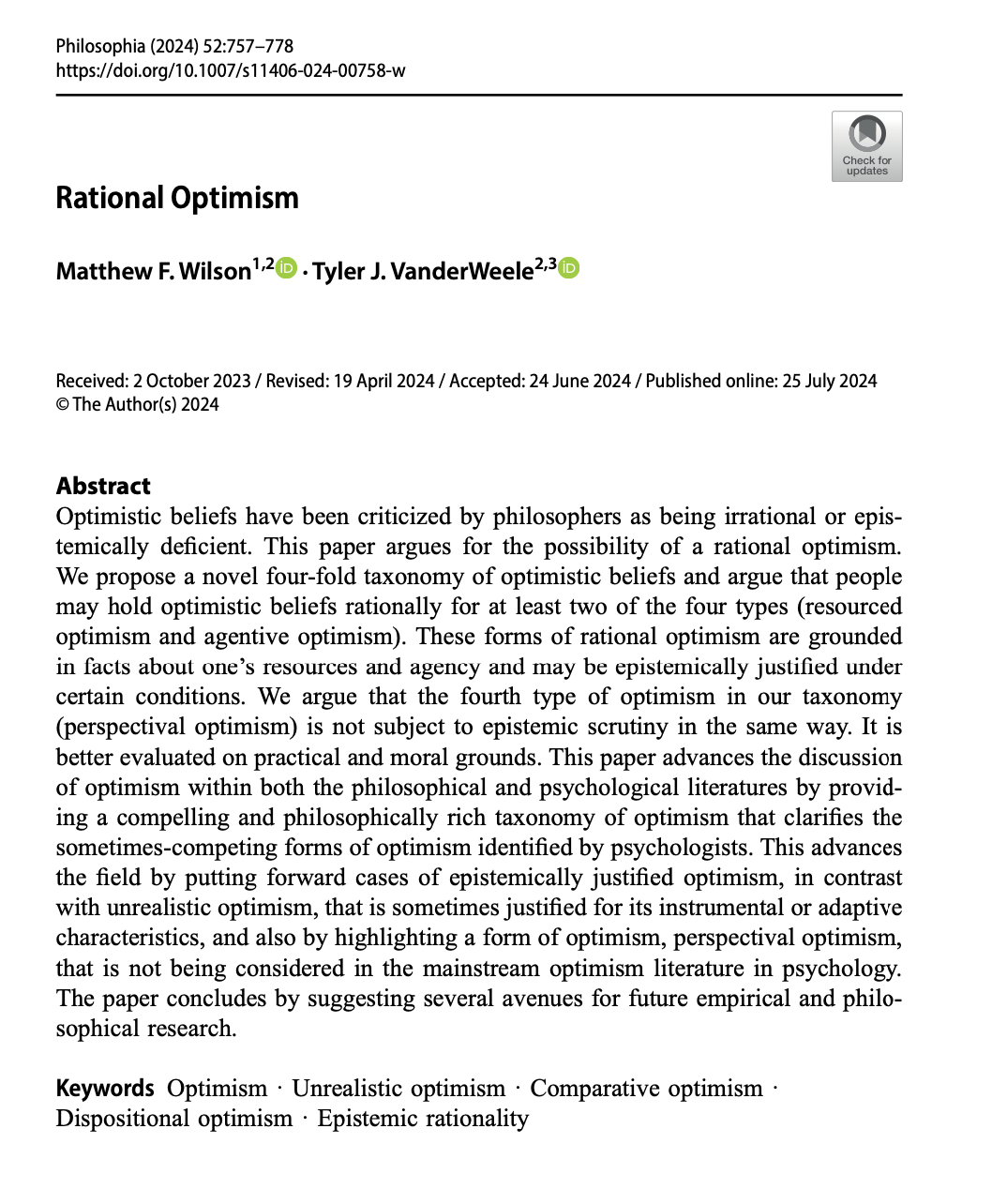
Rational Optimism
with Tyler VanderWeele
Philosophia, 2024
Is optimism merely a "positive illusion," or can it be a truly rational and grounded way of navigating the world? This paper introduces a novel four-fold taxonomy—including resourced, agentive, and perspectival optimism—to demonstrate how positive expectations can be epistemically justified rather than just instrumentally useful. By distinguishing between groundless bias and warranted belief, the authors provide a rigorous new framework for understanding the vital role of optimism in human flourishing and moral life.
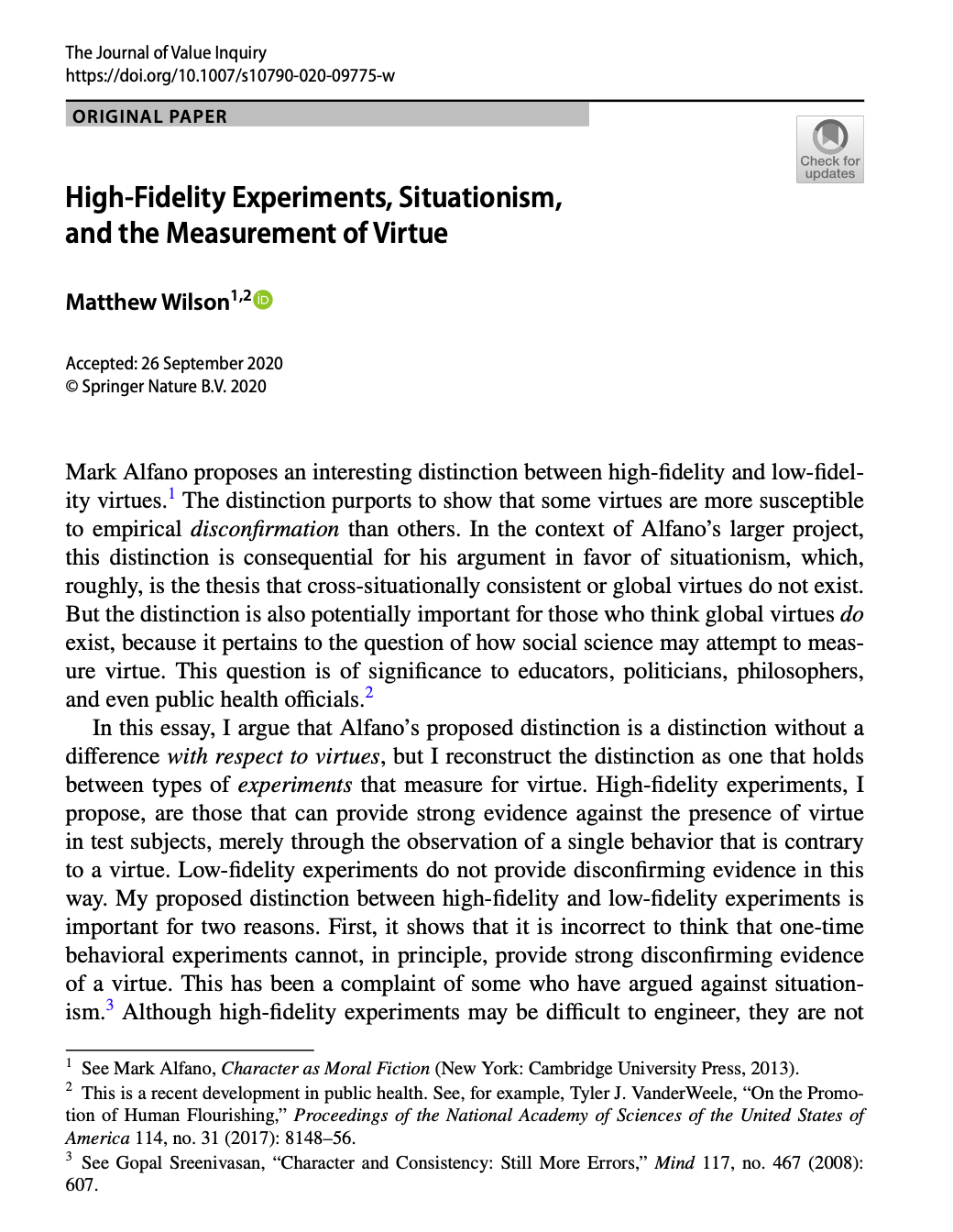
High-Fidelity Experiments, Situationism, and the Measurement of Virtue
The Journal of Value Inquiry, 2020
Can a single moral failure prove you lack character, or are virtues impossible to measure without years of observation? This paper explores the provocative idea of "high-fidelity experiments," which argue that specific, morally serious scenarios—such as finding a forgotten wallet—can provide powerful evidence against the existence of a virtue in just one encounter. By refining how we distinguish mere behavior from intentional action, this paper offers a rigorous new framework for measuring human virtue and challenging the boundaries of social psychology.

Taking Ownership While Giving Glory to God
Is it spiritually healthy for a Christian to "take ownership" of their work when Scripture teaches that God is the sole owner of all things? This paper examines the tension between psychological investment and biblical stewardship, suggesting that believers should view their projects as common ventures undertaken with God. By shifting from an exclusive sense of "mine" to a collaborative sense of "ours," professionals can pursue proactive excellence while recognizing the presence and activity of Christ in their daily labor.
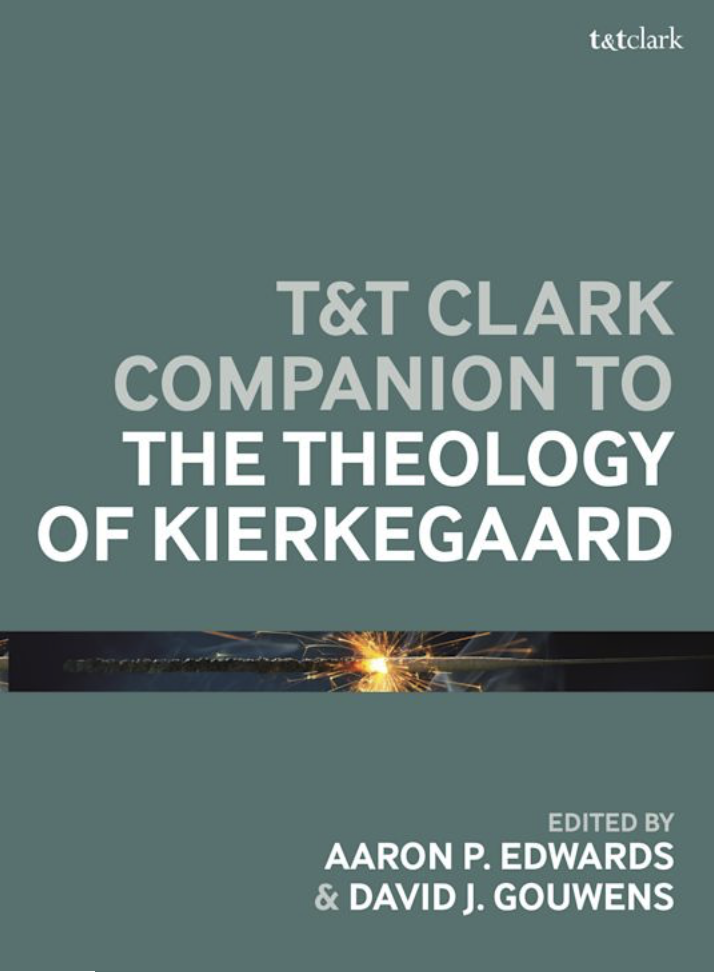
Faith: The Infinite Task of Passionate Belief
with C. Stephen Evans
T&T Clark Companion to the Theology of Kierkegaard, 2019
Does authentic faith demand a "crucifixion of the understanding," or can reason and trust achieve a "happy relationship"? This paper investigates Kierkegaard's view of faith as a passionate, ongoing task that requires both "infinite resignation" and a "leap" across the gap of historical uncertainty. By identifying offence, rather than doubt, as the true opposite of belief, Steve Evans and I clarify how spiritual trust transforms a person's identity and their persistent expectancy of victory in daily life.
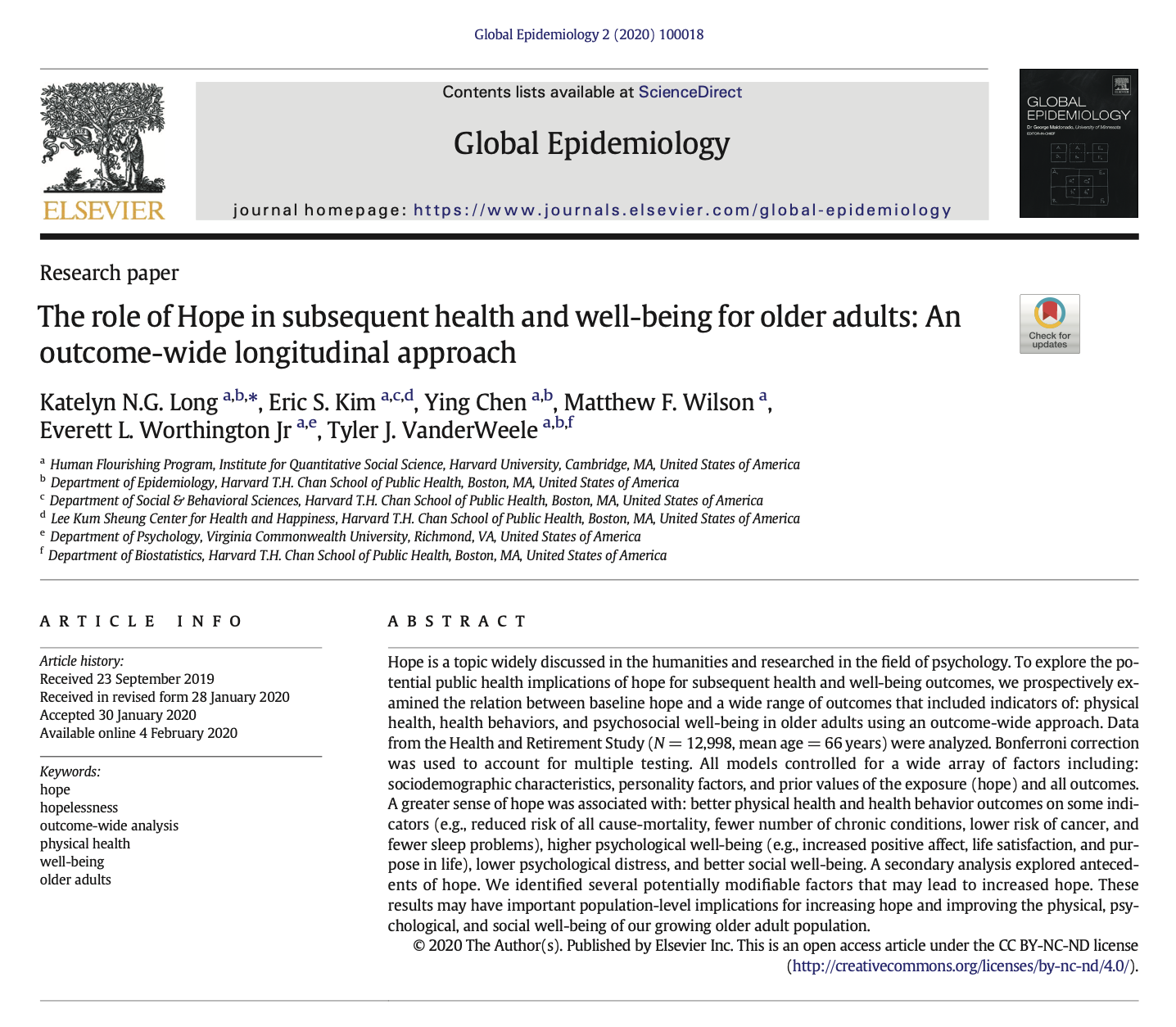
The Role of Hope in Subsequent Health and Well-being for Older Adults
with Katelyn Long, Eric Kim, Ying Chen, Everett Worthington Jr, and Tyler VanderWeele
Global Epidemiology, 2020
Is hope merely a comforting sentiment, or can it fundamentally alter physical health and longevity? Drawing on data from nearly 13,000 older adults, this study reveals that higher levels of hope are linked to a 16% reduction in all-cause mortality and a significantly lower risk of chronic conditions, including cancer and sleep problems. By examining hope as a combination of personal agency and strategic pathways, the authors provide a rigorous framework for using hope as a public health tool to enhance both psychological well-being and physical survival.